





VA and IPS are the two panel types you will encounter most often when shopping for a monitor in 2025. Both are LCD technologies. Both use a liquid crystal layer to control light. Both produce excellent images. But the way they work at a molecular level produces fundamentally different performance characteristics, and choosing the wrong one for your use case means paying for strengths you will not use while accepting weaknesses that will frustrate you daily.
This guide gives you the full picture. It explains what each panel type actually does, presents the key performance metrics side by side, covers the newer technologies (IPS Black, Mini LED VA) that are shifting the traditional trade-offs, and gives a specific recommendation for every major use case.
Quick Answer
Choose IPS for office productivity, professional creative work, multi-person viewing, portable monitors, and competitive gaming. IPS panels deliver wider viewing angles (178°), superior colour accuracy, and faster response times. Choose VA for cinematic movie watching, atmospheric gaming in dark rooms, and any use case where deep blacks and high contrast are the priority. VA panels deliver contrast ratios of 3,000:1 to 6,000:1, three to six times higher than standard IPS, producing genuinely black scenes rather than dark grey ones. Neither is universally better; the right choice depends entirely on what you do with your screen.
What IPS and VA Panels Actually Are
IPS: In-Plane Switching
IPS panels work by aligning liquid crystal molecules horizontally parallel to the glass substrate and rotating them within that same plane when voltage is applied. This parallel, in-plane movement is the source of the technology's name and its defining characteristic. Because the crystals rotate within a consistent plane, the angle from which you view the panel has minimal effect on the colour or brightness of the image.
The result is wide viewing angles, typically 178 degrees horizontally and vertically, with minimal colour shift. IPS panels typically deliver colour accuracy meeting professional standards, with Delta E values under 2 (the threshold at which colour differences become visible to the human eye). This makes IPS the preferred choice for any work where colour fidelity matters: graphic design, photo editing, video production, and calibrated content review.
VA: Vertical Alignment
VA panels align liquid crystal molecules vertically perpendicular to the glass substrate when no voltage is applied. This vertical resting position blocks light more completely than horizontal IPS alignment, which is the structural source of VA's defining advantage: dramatically higher contrast ratios.
When the pixels are displaying black, the vertically aligned crystals block significantly more backlight leakage than an IPS panel's horizontal alignment allows. VA panels achieve contrast ratios of 3,000:1 to 6,000:1, compared to the standard 1,000:1 of most IPS panels, making VA blacks appear genuinely dark rather than the dark grey that IPS panels display in the same conditions. The trade-off is slower pixel response times (affecting motion clarity in fast-paced content) and narrower effective viewing angles.
VA vs IPS: The Key Performance Metrics
| Metric | IPS | VA | Winner |
|---|---|---|---|
| Contrast ratio | ~1,000:1 (standard); up to 2,000:1 (IPS Black) | 3,000:1 to 6,000:1 | VA |
| Black depth | Dark grey in dim rooms; IPS glow at corners | Genuinely deep black; excellent black uniformity | VA |
| Viewing angles | 178° H/V; minimal colour shift from any angle | Narrower; gamma shift and colour change visible off-axis | IPS |
| Colour accuracy | Delta E < 2; 95-100% sRGB; professional-grade | Good for everyday use; gamma shift off-axis limits professional precision | IPS |
| Response time | 1 to 3ms GtG; flagship panels to 0.5ms | 4 to 8ms typical; can cause dark-scene smearing | IPS |
| Black smearing / ghosting | Rare; fast pixel transitions prevent ghosting | Present in some panels; dark objects leave a trailing shadow | IPS |
| Brightness (peak) | Typically 300 to 400+ nits; strong in bright rooms | Often 200 to 300 nits; less suitable for bright ambient light | IPS |
| IPS glow | Present; visible corner glow on dark content | Absent; superior black uniformity | VA |
| Price at equivalent specs | Moderate to premium | Generally more affordable at similar specs | VA |
| HDR performance | Limited without Mini LED local dimming | Better native dark contrast; excellent with Mini LED VA | VA |
Side-by-Side Performance Visualisation
Contrast Ratio
Response Time (lower is better)
Effective Viewing Angle (wider is better)
Sources: Royal Display Panel Guide, Display Ninja
"VA panels have the highest contrast ratio, but it usually comes at the cost of slower response time, so they are excellent for watching movies but not suitable for competitive gaming. IPS panels resist colour shifts at different viewing angles and perform better in bright rooms, while VA panels excel in dark environments with superior contrast ratios."
Display Ninja — Expert Panel Technology Guide, 2025

The Four Differences That Matter Most in Real Use
1. Contrast Ratio: The Defining Advantage of VA
Contrast ratio, the difference between the brightest white and the darkest black a monitor can produce simultaneously, is where VA and IPS diverge most dramatically. Standard IPS panels achieve a native contrast ratio of 1,000:1, while even budget-friendly VA panels consistently deliver 2,500:1 to 3,000:1, with high-end VA models reaching 5,000:1 to 6,000:1.
This difference is perceptually significant. In a space scene in a game or film, the blackness of space on a VA panel feels dimensional and deep. The same scene on a standard IPS panel shows dark grey rather than true black, a visible limitation when the scene relies on contrast for visual impact. Display experts describe a 70 to 80% improvement in perceived depth in high-contrast scenes on VA versus standard IPS, the kind of improvement that is immediately apparent in side-by-side comparison.
2. Viewing Angles and the Gamma Shift Problem of VA
IPS delivers consistent colour accuracy at virtually any viewing angle up to 178 degrees. VA panels suffer from "Gamma Shift" — where the secondary screen appears washed out or discoloured when viewed from the side. In a standard single-screen desktop setup where the user sits directly in front of the monitor, this limitation is manageable. But it creates real problems in several scenarios:
- Dual-monitor or multi-screen setups: the secondary VA monitor, viewed at an angle, will display shifted colours and brightness. This is why IPS is strongly preferred for any multi-monitor arrangement.
- Collaborative viewing: showing a VA monitor to a colleague seated to the side produces a noticeably different (and less accurate) image than the user sees head-on.
- Portable monitors: portable monitors are frequently used at non-ideal angles, tilted, or positioned beside a laptop. VA panels are particularly unsuitable for this use case due to gamma shift at off-angles.
3. Response Time and Black Smearing
IPS panels respond in 1 to 3ms GtG (grey-to-grey), with flagship panels reaching 0.5ms. VA panels typically respond in 4 to 8ms. While this difference sounds small, it produces a visible artefact unique to VA panels called "black smearing" or dark ghosting: when a dark-coloured object moves quickly against a dark background, the pixel transition is too slow to keep pace, leaving a trailing shadow behind the object.
Black smearing is most visible in fast-paced games and action-heavy video content. In slower content turn-based games, documents, spreadsheets, or most films, the response time difference between IPS and VA is imperceptible. For competitive gaming specifically, IPS is the clear technical choice; for atmospheric or slower-paced gaming, VA's contrast advantage often outweighs its slower response.
4. IPS Glow vs VA Black Uniformity
IPS panels have a well-documented limitation called IPS glow, a faint brightening visible in the corners and edges of the screen when displaying dark content in a dim room. This is caused by backlight leakage at the edges of the panel. VA panels do not exhibit IPS glow; their superior light-blocking capability produces better black uniformity across the entire screen surface. In black uniformity tests, VA panels consistently show lower variance and deviation, often by a factor of 2x or more compared to IPS panels.
The Technologies Shifting the VA vs IPS Landscape in 2025
The traditional VA vs IPS comparison is evolving. Two significant technology developments are reducing the historical trade-offs of each panel type.
IPS Black: Closing the Contrast Gap
IPS Black is LG Display's technology that modifies the standard IPS panel construction to achieve significantly higher contrast ratios. TFTCentral's analysis of LG Display's roadmap confirms that IPS Black doubles the standard IPS contrast ratio from 1,000:1 to 2,000:1, with further development toward even higher values in the IPS Black 2.0 generation.
At CES 2025, Dell unveiled the UltraSharp 27 4K and 32 4K monitors featuring enhanced IPS Black panels achieving a 3,000:1 contrast ratio, bringing them into VA territory while maintaining the wide viewing angles and colour accuracy advantages of IPS. At 3,000:1 contrast alongside Delta E < 2 colour accuracy and 99% DCI-P3 coverage, these panels represent a significant reduction in IPS's traditional weakness. The premium price point remains a barrier for most buyers.
Mini LED VA: Expanding HDR Performance
Mini LED backlighting combines with VA panels to produce monitors with thousands of independently controlled backlight zones. This enables precise local dimming, brightening only the areas of the screen that need to be bright, while keeping other areas genuinely dark. The result is HDR performance that approaches OLED for localised highlight and shadow separation, while maintaining VA's native contrast advantage for full-screen dark content. Samsung's Odyssey series and several high-end gaming monitors from other manufacturers have demonstrated that Mini LED VA delivers the most impressive HDR experience in the LCD category below OLED's price point.
VA vs IPS: Which to Choose for Your Use Case
Office and Productivity Work
✓ Choose IPS
For documents, spreadsheets, email, coding, and video calls, IPS is the clear choice. The wide viewing angle ensures colour consistency regardless of your exact head position. Multiple colleagues can view the screen simultaneously without colour shift. IPS panels are generally better for office work as they provide more consistent brightness and colour stability in well-lit environments, the typical condition for office use. For multi-monitor setups, IPS is essential: VA's gamma shift when viewed at an angle makes a secondary VA monitor visibly inaccurate compared to the primary screen.
Cinematic Movies and Streaming
✓ Choose VA
For film and high-quality streaming content watched in a controlled home viewing environment, VA delivers a superior experience. The 3,000:1 to 5,000:1 contrast ratio produces cinematic depth in dark scenes that IPS panels simply cannot match. Shadow detail is preserved in ways that reveal information IPS renders as uniform dark grey. Film content is typically viewed at 24 fps, a frame rate at which VA's slower response time produces no visible smearing. For solo viewing directly in front of the screen, the viewing angle limitation of VA panels is not a practical problem.
Competitive Gaming (FPS, Racing, Fighting)
✓ Choose IPS
For fast-paced competitive games, first-person shooters, racing games, fighting games, IPS is the technically superior choice. The 1ms to 3ms response time prevents motion blur and ghosting that VA's 4ms to 8ms response produces in fast-moving dark scenes. IPS models typically deliver 1ms GtG response time, while VA alternatives provide 3,000:1 contrast but with 8ms to 12ms average response times, a trade-off that competitive players consistently resolve in favour of IPS for reaction-speed-critical genres. Wide viewing angles also help when the player's head naturally moves during play.
Immersive / Atmospheric Gaming (RPGs, Horror, Open World)
✓ Choose VA
For slow to medium-paced immersive games, RPGs, horror titles, atmospheric adventures, open-world exploration, VA's contrast advantage transforms the experience. Dark environments, caves, night scenes, and candlelit interiors that look washed-out on IPS appear with genuine depth and shadow detail on VA. The slower response time is not a meaningful limitation at the frame rates and scene pacing of these genres. For a player in a dark room seeking full immersion, VA consistently delivers a more cinematic result than IPS.
Photo and Video Editing / Creative Work
✓ Choose IPS
For professional colour work, IPS is the only practical choice. Delta E under 2 colour accuracy, wide viewing angles that maintain colour consistency, and coverage of 95-100% sRGB (with professional models covering 99% DCI-P3 and AdobeRGB) make IPS the panel type that professional photographers, videographers, and designers rely on. VA's gamma shift at off-angles means that the same image looks different depending on viewing position, an unacceptable inconsistency for colour-critical work.
Portable Monitors and Laptop-Attached Displays
✓ Choose IPS — Always
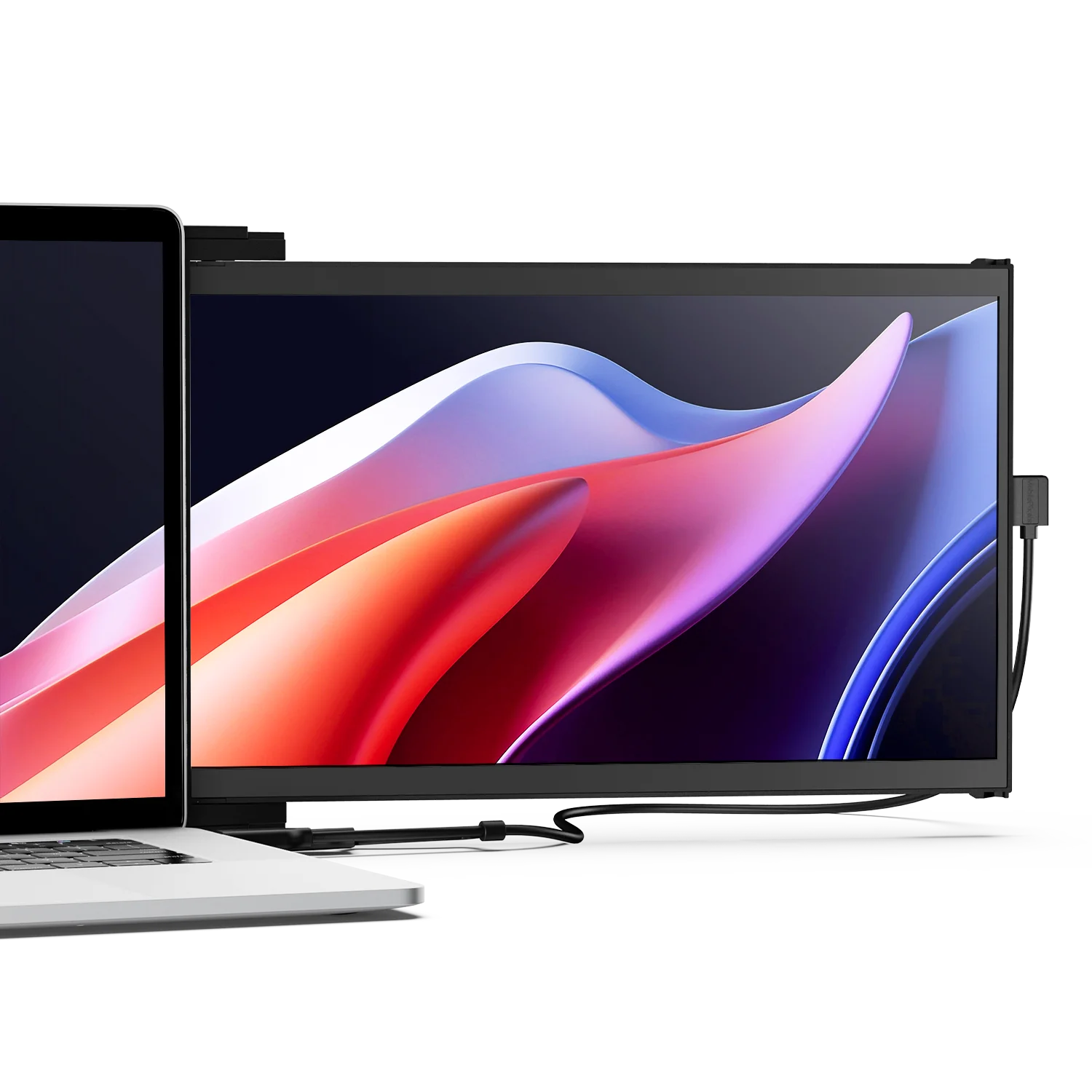
Portable monitors by their nature, are used at varied angles positioned beside a laptop, tilted to accommodate different desks, and used in environments where head position changes constantly. VA's gamma shift at off-angles means colour accuracy degrades as soon as the monitor is not perfectly centred in the user's line of sight. For any portable or laptop-attached second screen, IPS is the only practical choice. This is reflected in the panel specification of virtually every quality portable monitor on the market, including those from Mobile Pixels, which use IPS panels precisely because portable monitors must maintain colour consistency across the range of positions and angles they are used in.
Budget Buyers Prioritising Image Depth
✓ Consider VA
VA monitors are generally more affordable than IPS monitors, especially in the budget-friendly segment. A budget VA monitor delivers 3,000:1 contrast at a price where a comparable IPS still sits at 1,000:1. For a buyer whose primary use is solo media consumption or casual gaming in a fixed seating position, VA at a lower price point can deliver a better perceptual image quality than IPS at the same price. The caveat: evaluate the specific panel's response time and check independent reviews for black smearing performance before purchasing.

Quick Decision Reference
| Your Situation | Choose | Primary Reason |
|---|---|---|
| Office/productivity/coding | IPS | Wide angles, colour consistency, bright room performance |
| Movies and streaming, solo viewing, dim room | VA | Deep blacks, high contrast, cinematic depth |
| Competitive FPS/racing/fighting games | IPS | Fast response time, no dark ghosting |
| Atmospheric RPG/horror/open world gaming | VA | Superior dark scene depth and shadow detail |
| Photo/video editing, creative professionals | IPS | Colour accuracy, Delta E < 2, consistent off-axis colour |
| Multi-monitor/dual-screen setups | IPS | No gamma shift when the secondary monitor is viewed at an angle |
| Portable monitors and laptop extenders | IPS | Colour accuracy maintained at varied angles of use |
| Collaborative viewing/shared screens | IPS | Everyone sees the same image regardless of seating position |
| Budget media consumption, solo, fixed position | VA | Higher contrast at lower cost; best image depth per dollar |
| Premium productivity with deep blacks (budget allows) | IPS Black | 3,000:1 contrast with IPS colour accuracy and viewing angles |
Frequently Asked Questions
Is VA or IPS better overall?
Neither is universally better; they excel in different scenarios. IPS is better for office work, creative professionals, multi-monitor setups, portable monitors, competitive gaming, and any situation where viewing angle consistency matters. VA is better for cinematic movie watching, atmospheric gaming in dark rooms, and any situation where deep blacks and high contrast are the priority. The right choice depends entirely on your primary use case and typical viewing environment.
What is the contrast ratio difference between VA and IPS?
Standard IPS panels achieve approximately 1,000:1 contrast. VA panels typically achieve 3,000:1 to 5,000:1, with some high-end models reaching 6,000:1. This is a three to six times difference in contrast ratio significant enough to be immediately visible in side-by-side comparison on any content with dark scenes. The new IPS Black technology has reduced this gap somewhat, with enhanced IPS Black panels reaching 2,000:1 to 3,000:1, but standard VA still outperforms standard IPS on contrast by a substantial margin.
Is VA good for gaming?
It depends on the type of gaming. For slow to medium-paced games, RPGs, open-world exploration, horror titles, strategy games, VA is excellent. The superior contrast makes dark environments and night scenes significantly more atmospheric and detailed than IPS. For fast-paced competitive games (FPS, racing, fighting), IPS is the better choice because VA's slower response time (4 to 8ms vs IPS's 1 to 3ms) produces dark ghosting and smearing in fast-moving scenes, which is particularly distracting in dark game environments.
What is IPS glow and does VA have it?
IPS glow is a backlight leakage artefact visible as a faint brightening in the corners and edges of IPS panels when displaying dark content in a dim room. It is caused by the IPS panel's liquid crystal alignment, allowing more light to leak through even when displaying black. VA panels do not exhibit IPS glow; their vertical alignment of liquid crystals blocks light more effectively, producing more uniform blacks across the entire screen. VA's superior black uniformity is one of its clear advantages for dark room viewing.
What is VA black smearing?
Black smearing, also called dark ghosting, is an artefact unique to VA panels caused by their slower pixel response time. When a dark-coloured object moves quickly against a dark background, for example, a dark game character running through a shadowed environment, the pixels transitioning between dark values cannot keep pace with the movement, leaving a faint trailing shadow behind the object. It is most visible in dark-on-dark fast motion and is the primary limitation of VA panels for competitive gaming use. Its severity varies between specific VA panels; some modern VA panels manage it better than others.
Is IPS or VA better for a dual-monitor setup?
IPS is strongly recommended for dual-monitor setups. When your secondary monitor is positioned to the side of your primary monitor, you view it at an angle. VA panels exhibit gamma shift at off-axis angles — the image appears with altered brightness and colour accuracy when not viewed perfectly head-on. In a dual-monitor arrangement, the secondary VA screen will look noticeably different from the primary, making it frustrating for colour-sensitive work and even for general reference use. IPS maintains colour consistency at up to 178 degrees, making it the only practical choice for multi-monitor configurations.
What is IPS Black and how does it compare to VA?
IPS Black is LG Display's enhanced IPS technology that increases the standard IPS contrast ratio from 1,000:1 to 2,000:1 (standard IPS Black) and up to 3,000:1 (enhanced IPS Black as seen in Dell's 2025 UltraSharp monitors). This narrows but does not close the gap with standard VA panels (3,000:1 to 5,000:1). IPS Black panels maintain the wide viewing angles and colour accuracy advantages of IPS while delivering significantly better black depth. They are best suited for buyers who need IPS colour accuracy but want better dark room performance, though they carry a substantial price premium over both standard IPS and VA alternatives.
Which panel type is better for a portable monitor?
IPS is the correct choice for any portable monitor, without exception. Portable monitors are used in a wide variety of positions beside a laptop, at an angle, tilted to accommodate different desk surfaces, and in environments where head position changes constantly throughout the day. VA panels exhibit gamma shift, visible colour, and brightness changes when viewed from off-axis angles. In the varied conditions of portable monitor use, this produces a frustrating inconsistency in colour accuracy. IPS maintains consistent colour at virtually any angle, which is why every quality portable monitor on the market uses IPS panels rather than VA.
Discover Tech Gadgets





Leave a comment
All comments are moderated before being published.
This site is protected by hCaptcha and the hCaptcha Privacy Policy and Terms of Service apply.